
Arrest Warrants in Davis County
Before a Davis County arrest warrant issues, a judge looks hard at the paperwork. Utah Rule of Criminal Procedure 6 calls for review of the charging information plus any supporting statements or affidavits. The judge must find probable cause. The judge must also see a reason to pick a warrant over a summons. Utah Code §77-7-5 demands the same two findings. An unknown address counts as one basis. So does a likely failure to appear, or a real danger of harm or breach of peace. When the accused is to appear, the order names the county or municipal law-enforcement agency responsible for execution, and the signed order stays with the court rather than on any public search page.
Probable Cause Under Utah Rule 6
An arrest warrant does not follow every charge automatically in Davis County. The judge reads the sworn or supporting material. Then the judge decides whether the facts tie the accused to the offense. A summons can do the job when custody is not needed. A warrant makes sense when appearance or safety concerns support that step. This early arrest process differs from a warrant issued later after a missed hearing, which Utah Rule 10 covers for failures to appear at arraignment or trial and Rule 22 covers for sentencing failures. The issuing court can tell you which order sits on the case.
Local distinction: the issuing court and the agency named for service are separate parts of a Davis County arrest warrant.
Inside a Davis County Arrest Warrant
No sample felony warrant is published on the Davis County portal, so this field list draws on Utah Rule 6 and the Utah Code instead. Treat it as a guide, not a promise. A court can restrict access to certain fields. Private identity details also should not be copied into any public post.
| Case number | Links the order to the charging file; no Davis format was verified. |
|---|---|
| Named person | Identifies the person to be brought before court. |
| Charge | Shows the alleged offense and classification in the case file. |
| Issuing judge and court | Identifies who signed the order and which clerk can answer. |
| Service agency | Utah law provides for the responsible agency to be named. |
| Release terms | Ask the court about bail or other conditions; no county schedule was found. |
After Arrest, Rule 9A Sets a Clock
Utah Rule 9A sets a firm clock after an initial arrest warrant. A person who cannot meet release conditions must go before a magistrate within 48 hours. The issuing court must see anyone still held no later than the third day. Meet the release conditions and you go free, with instructions to appear. That timing rule does not fit every later failure-to-appear warrant. The warrant's stage and the actual release terms control. Davis County sets no posted criminal bond amounts, so ask the issuing court or your counsel.
Serving Davis County Arrest Warrants
Several hands can execute a Davis County warrant. The Sheriff, municipal police, the Utah Highway Patrol, or another authorized peace officer may act according to the order's terms and jurisdiction. Utah law has the warrant name the agency when the accused is to appear. Civil Process handles civil bench warrants and runs on a separate track from criminal service. Nighttime execution of a misdemeanor warrant is limited, with exceptions when the warrant allows it, the person is in a public place or on a highway, or the officer runs into the person during another investigation. Felony warrants carry no such curb. Any arrest can come at any hour. After service in Davis County, release and court-appearance instructions come from the court itself.
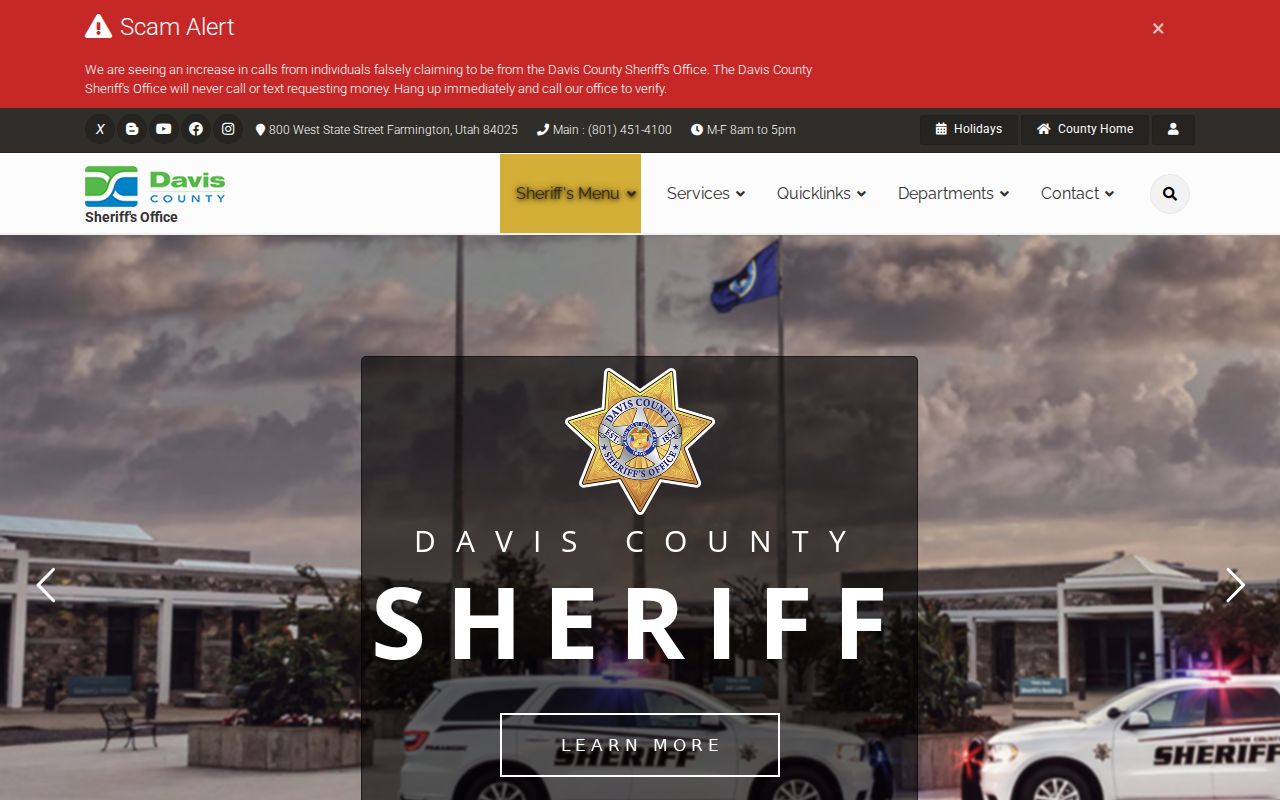
The Davis County Sheriff's Office page lists the agency's main contact channels.
Federal Warrants Sit Outside BCI
A Davis County arrest warrant is a Utah state-court matter, full stop. A federal warrant flows from federal authority instead. The U.S. Marshals Service or another federal agency may serve it. The BCI statewide Utah search cannot confirm a federal warrant. PACER opens public federal case dockets, but it is no simple warrant checker. Sealed matters may not show at all. For a federal concern, lean on counsel, the federal court, or the Marshals' official district contact. A docket search that turns up nothing is not clearance.
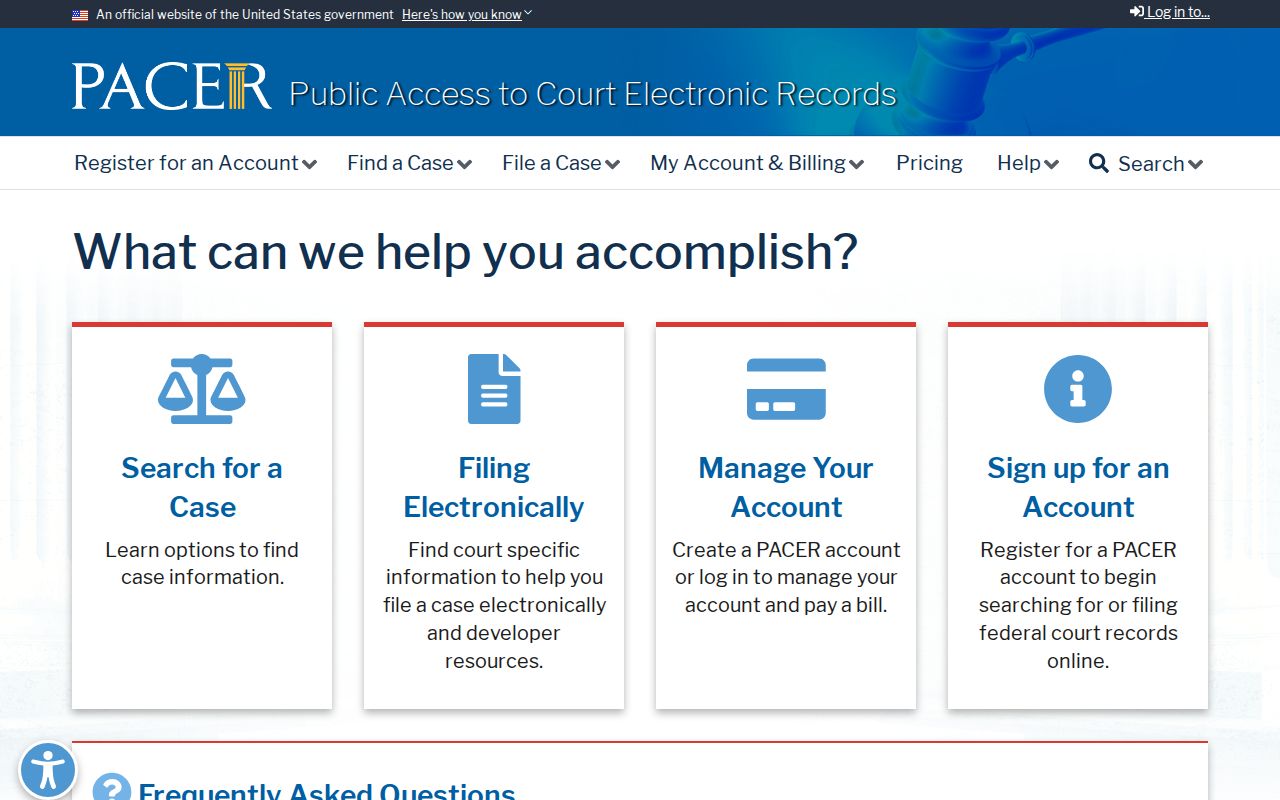
The image shows the federal case-search interface and its access controls.
Arrest Warrants, Summonses, and Bench Warrants
A summons orders a person to appear, with no initial arrest. An arrest warrant authorizes custody after a judge finds probable cause. A bench warrant typically appears when someone misses a later required court date or fails to comply. In Davis County, the court's notice and the order's stage tell you which response fits.
| Feature | Arrest Warrant | Summons | Bench Warrant |
|---|---|---|---|
| What it orders | Arrest and appearance before court. | Attend on the stated date. | Arrest after missed obligation or order. |
| Basis | Probable cause and need for a warrant. | Court process without initial custody. | Failure to appear or comply. |
| Who issues | Judge or magistrate. | Judge or authorized court process. | Judge handling the pending case. |
| Response | Ask counsel and issuing court about release. | Appear as directed. | Ask the issuing clerk about payment or recall. |
Layton and Bountiful Court Locations
Second District Court sits in three Davis County spots: Farmington, Bountiful, and Layton. The Layton office is at 425 North Wasatch Drive, (801) 444-4300. Bountiful sits at 805 South Main Street, (801) 397-7000. A city police department nearby may serve an order. Still, the clerk for the district case controls its status. Read the court listed on your notice before you drive, because a countywide search cannot tell you which counter will hear the case.
Handle a Davis County Arrest Warrant
Call a lawyer or the issuing clerk before you arrange any appearance. Ask whether the warrant is still active. Ask what release conditions apply. Find out whether the court allows a walk-through, a surrender, bond, or a motion to recall. Davis County Legal Defenders posts public-defense information for people who may qualify. The courts here publish no universal recall form or set fee for criminal cases.
Important: Do not approach an agency based only on an online entry; first confirm the case and release instructions with counsel or the issuing court.
Public Defense Is a Local Resource
Davis County Legal Defenders sits at 28 East State Street, Suite 121, in Farmington, and the listed phone is (801) 451-3010. The office routes people into public defense. Whether you qualify, and who represents you, depends on the case. Keep one thing clear: this office cannot recall a warrant. Only the issuing judge can. If you get released, show up on the ordered date. Under Utah Rule 10, missing court can bring a later warrant plus bail forfeiture, and the underlying case keeps going either way.
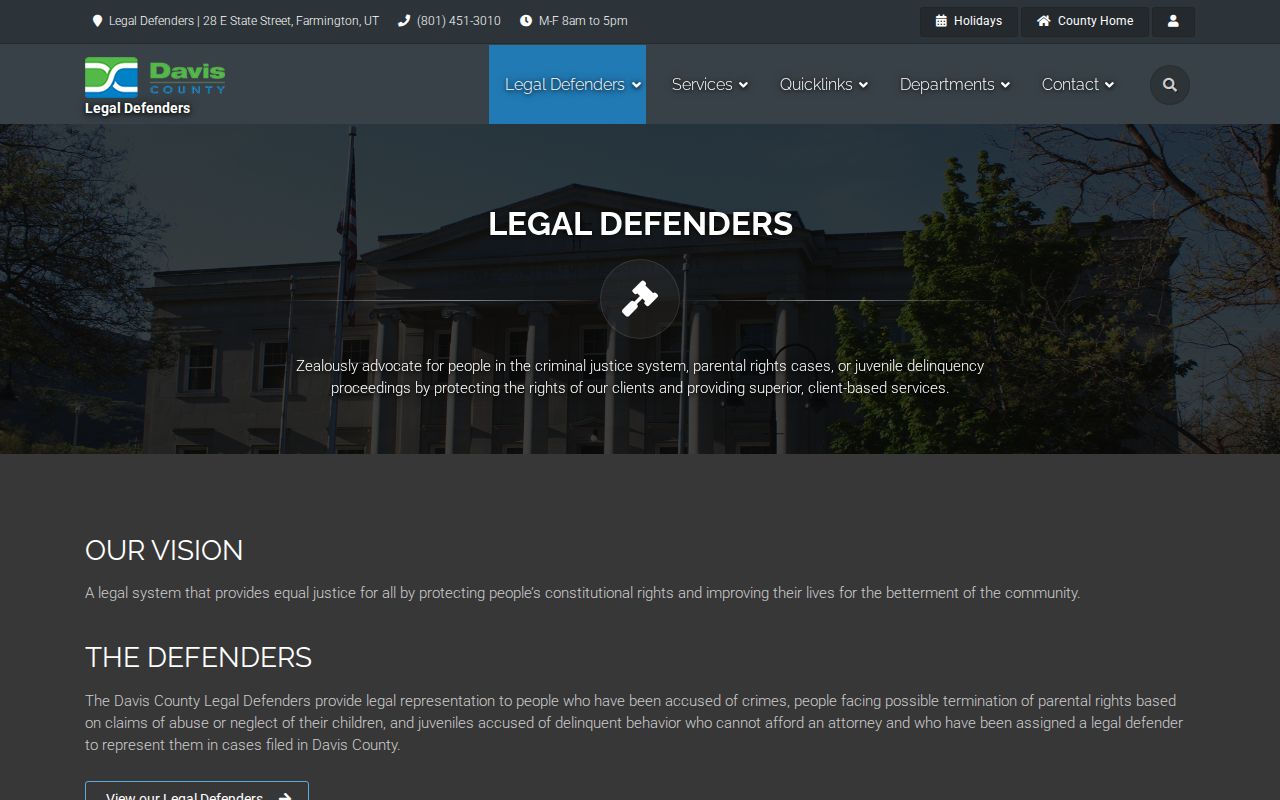
The Legal Defenders page lists the public-defense resource.